Everything about
Strengthen your global portfolio with the timeless value of precious metals
Explore professionally guided opportunities in gold, silver, and copper through investment solutions tailored for NRIs, supporting portfolio diversification and long-term wealth creation.
What are Precious Metals?
Precious metals such as Gold, Silver and Copper can form part of a diversified portfolio and provide exposure to an asset class that may behave differently from traditional equity and fixed-income investments. For NRIs, the appropriate investment avenue depends on factors such as country of residence, financial objectives, risk profile, investment horizon, liquidity needs, and existing portfolio.
How we make Precious Metals work better for you?
At Ashutosh Financial Services, we help NRIs evaluate suitable precious metal investment opportunities across Indian and international markets. Our approach considers portfolio diversification along with FEMA requirements, taxation, currency movements, product structure, liquidity, and repatriation considerations, helping NRIs make informed decisions based on their broader financial objectives rather than short-term market trends or past performance.

Precious metals can serve different roles within an NRI portfolio. Depending on eligibility, investment objectives and applicable regulations, investors may consider exposure to gold, silver, copper and other metals through suitable investment products.

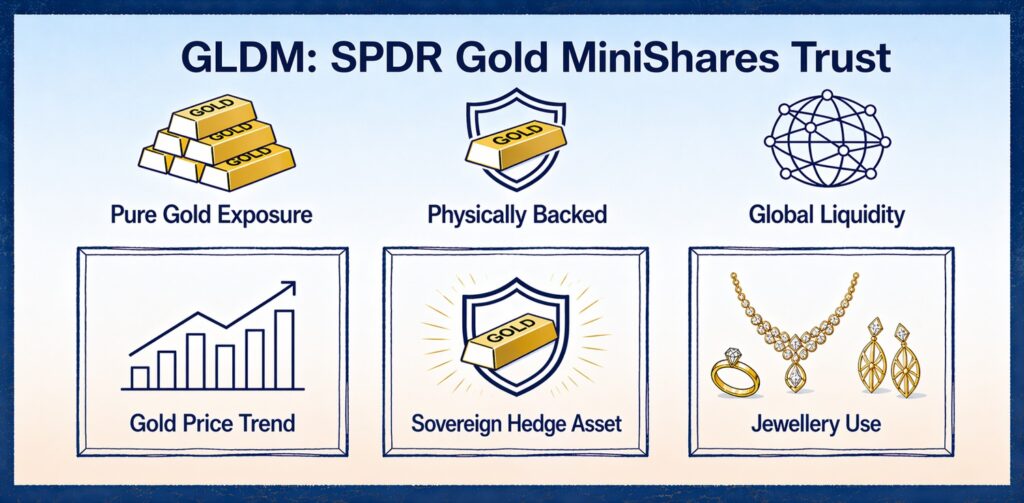
Gold has consolidated near $4,399/oz after reaching above $4,540 in early September, following a 10.5% gain in August. The near-term outlook is closely linked to the Federal Reserve’s rate decision, with markets pricing around a 60% probability of a hike. Inflation data and comments from Governor Waller could influence expectations, while geopolitical tensions and a weaker dollar continue to support demand.
Central-bank buying remains supportive, with 244 tonnes purchased in Q1 2026 and the People’s Bank of China extending its 18-month buying streak. However, ETF positions below cost could create selling pressure near recovery levels. Institutional views remain divided, with J.P. Morgan projecting $6,000/oz by year-end, while Macquarie targets $4,300 and expects a gradual decline through 2030.
Silver trades near $66.58/oz after reaching around $70 in late August, following a 14.9% August gain and showing higher volatility than gold. The gold-to-silver ratio moved from 61.7 to 70.4 before returning to 66.08, highlighting silver’s smaller market depth and sensitivity to investment flows.
Industrial demand remains key, accounting for around 58% of total demand, supported by solar and electricity-grid manufacturing. Supply is also supportive, with a sixth consecutive deficit of around 46 Moz expected in 2026. Near-term prices remain sensitive to Fed, ECB and Bank of Japan policies and inflation data.
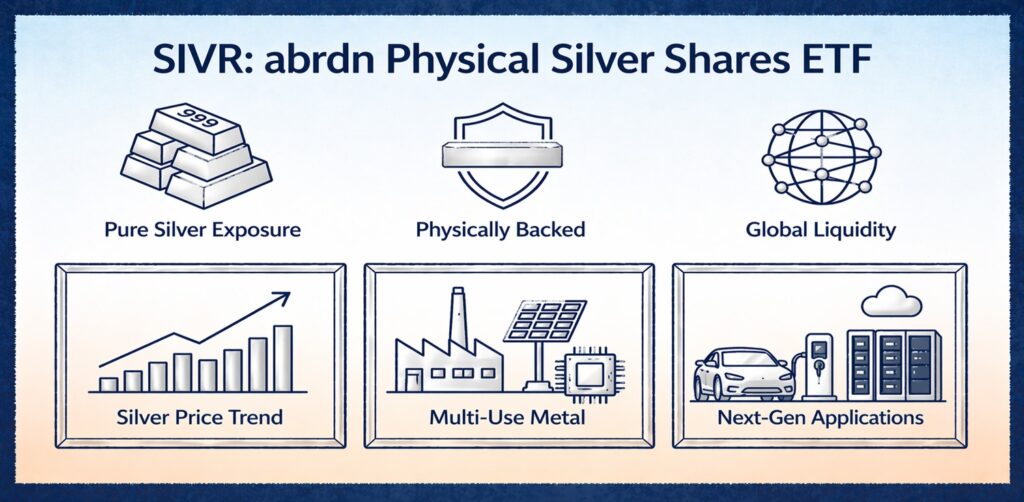
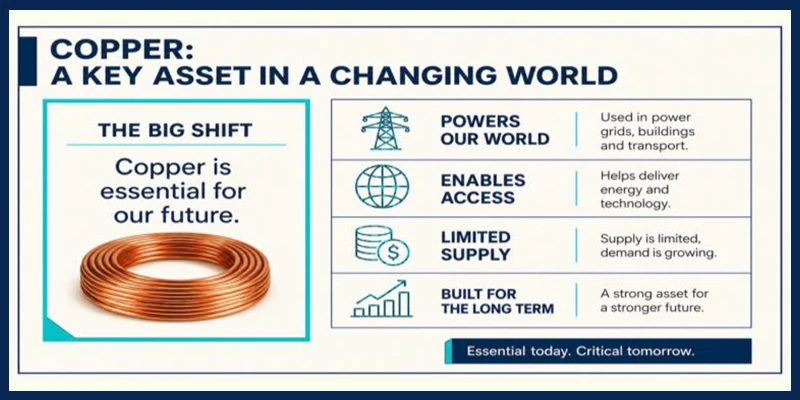
Copper is essential for power grids, buildings, transportation, renewable energy and modern technology. As electric vehicles, clean energy and AI-powered data centres expand, copper demand is expected to rise. According to Wood Mackenzie, global demand could grow 24% to 42.7 million tonnes annually by 2035, while BHP expects it to exceed 50 million tonnes by 2050. With new mines taking years to develop, supply challenges could strengthen copper’s long-term investment potential.
Investors can explore copper mining companies, metal and mining mutual funds or ETFs, eligible global copper investments, and companies involved in power grids, electrical equipment, EVs and renewable energy. Copper powers our world and enables access to energy and technology, while growing demand and limited supply may support its long-term potential.
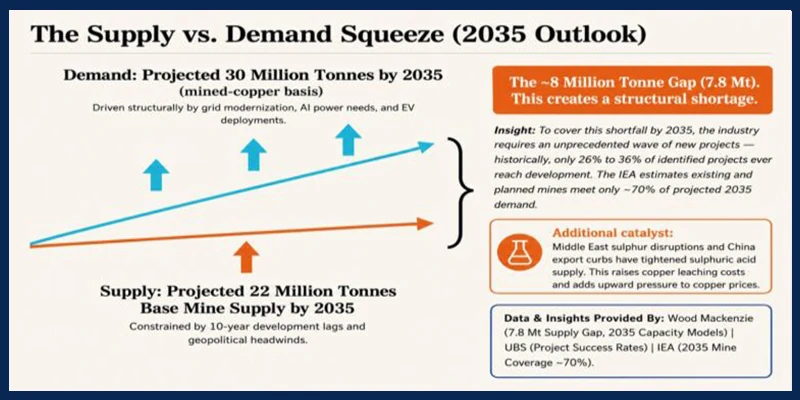
By 2035, global copper demand is projected to reach approximately 30 million tonnes, driven by structural growth in grid modernization, AI-related power infrastructure, and electric vehicle (EV) deployment. In contrast, projected base mine supply is estimated at around 22 million tonnes, constrained by long 10-year development timelines and increasing geopolitical challenges. This creates an estimated 7.8 million tonne structural supply gap.
Closing this gap would require an unprecedented pace of new mining projects, particularly because historically only around 26%–36% of identified projects have reached development. Existing and planned mines are estimated to cover only about 70% of projected 2035 demand. Additional pressures, including sulphur supply disruptions in the Middle East and tighter Chinese sulphuric acid exports, could increase copper leaching costs and add further upward pressure to copper prices.
Investing in precious metals means putting some money into gold, silver, or other valuable metals. NRIs invest in them to protect wealth during inflation, currency fluctuations, and uncertain market conditions. NRIs can invest through physical gold and silver, ETFs, mutual funds, and other eligible options in India. For beginners, investing a small portion of savings in precious metals can help diversify a portfolio and reduce overall risk.
Mutual funds can be a convenient way for NRIs to get exposure to precious metals such as gold and silver without having to buy or store physical metals. These investments are professionally managed and can be included as part of a diversified portfolio. The value of these investments can be affected by global metal prices, currency movements, and changes in demand and supply. NRIs can consider this option based on their financial goals, risk profile, investment horizon, and applicable regulations.
NRIs can explore both Indian and international investment opportunities to build a diversified metals portfolio. While India-based investments can provide exposure to the domestic market, U.S.-listed ETFs can offer access to globally traded metals in U.S. dollars. Depending on their investment objectives, NRIs can consider a combination of Gold, Silver, Copper, and other metals to diversify across commodities, markets, and currencies as part of a long-term wealth creation strategy.
Collaboration with Vested Finance: Ashutosh Financial Services helps eligible investors explore global precious metal investment opportunities through the Vested Finance platform. Through this platform, investors may access eligible US-listed investment products linked to Gold, Silver and Copper subject to product availability, eligibility, applicable regulations, and platform terms.
Precious Metals Investing through Vested Finance: Vested Finance provides access to eligible US-listed ETFs that may offer exposure to precious metals through different investment structures. This provides an alternative to direct physical ownership of precious metals. Investors should consider the ETF structure, underlying exposure, costs, liquidity, market volatility, currency movements, taxation, and other applicable risks before investing.
How to Invest through Vested Finance: Investors can begin by assessing their investment objectives, risk profile, investment horizon, liquidity requirements, and existing portfolio. Eligible investors can complete the applicable registration and KYC process with Vested Finance, review available US-listed precious metal ETFs, and make their investment decisions based on the relevant product information. Investments remain subject to market risks, currency fluctuations, taxation, regulatory requirements, costs, and product-specific terms.

Precious metals can provide exposure to an alternative asset class and may complement traditional investments such as equities and fixed-income securities. Gold is widely considered a store of value, while silver and copper also have significant industrial and investment demand.
Taxation depends on the type of precious metal investment, holding period, transaction structure, and prevailing tax regulations.
The tax treatment of precious metal ETFs, and international precious metal investments can differ. Interest earned on SGBs may be taxable, while capital gains treatment depends on the applicable rules and nature of the transaction.
| Period of holding | Type of Gain | Tax Rate for NRI |
|---|---|---|
| Less than 12 months | STCG | As per Tax Slab |
| More than 12 months | LTCG | 12.5% (Section 197) |
1
We begin by understanding your country of residence, financial goals, investment horizon, risk profile, liquidity needs and existing investments to establish a clear view of your financial requirements.
We consider:
2
We assess your existing India and international investments to understand current precious metal exposure, concentration risks, diversification opportunities and the role precious metals could potentially play within your overall portfolio.
Our assessment considers:
3
Our research-led approach evaluates suitable precious metal investment avenues based on your objectives, eligibility, country of residence, portfolio requirements and applicable regulatory considerations.
Our investment universe may include:
4
Based on our assessment, we present suitable investment approaches along with their rationale, portfolio role, costs, risks and relevant regulatory considerations. The objective is to provide clarity before you make an investment decision.
We provide clarity on:
5
Once the investment approach is approved, we support you through the relevant documentation, account setup and transaction process, subject to product eligibility and applicable regulatory requirements.
We assist with:
6
Our relationship continues beyond the initial investment. We review relevant portfolio developments, market conditions and allocation to help assess whether your precious metal exposure remains aligned with your evolving financial objectives.
Our review considers:
Other service providers bill you separately for each service, making you pay more at extra costs.


Achieving financial stability begins with the right advice. Our experienced advisors help you identify suitable investment opportunities, manage risks, and create a clear strategy for long-term financial growth.





















Find quick answers to common questions about our services, processes, and financial solutions.
Precious metal investments provide exposure to assets such as gold, silver, copper and other metals through eligible investment products. NRIs can evaluate suitable avenues based on their residential status, country of residence, investment objectives and applicable regulations.
NRIs may be eligible for certain gold and silver investment avenues, subject to the specific product, residential status, applicable Indian regulations and the laws of their country of residence. Eligibility should be verified before investing.
Eligible NRIs may be able to invest in certain precious metal ETFs depending on the product structure, platform, country of residence and applicable regulations. Investors should also consider costs, liquidity, currency exposure and taxation.
Eligible NRIs may explore international precious metal investment opportunities through permitted platforms and products. Availability depends on the investor's country of residence, platform eligibility, local regulations, taxation and product-specific terms.
No. Depending on eligibility, NRIs can obtain precious metal exposure through financial products such as ETFs and other eligible investment avenues without physically purchasing or storing the underlying metal.
Precious metals can provide portfolio diversification, potential wealth-preservation characteristics and exposure to globally traded assets. Their suitability depends on the investor's objectives, risk profile, investment horizon and existing asset allocation.
No. Precious metal investments are subject to market volatility, liquidity considerations, currency movements, taxation and other investment risks. Returns are not guaranteed.
Tax treatment depends on the investment product, holding period, residential status, country of tax residence and applicable tax laws. NRIs should consider Indian tax rules, DTAA provisions and taxation in their country of residence.
Depending on eligibility and applicable regulations, NRIs may evaluate both India-based and international precious metal investment opportunities. The appropriate combination depends on portfolio objectives, currency exposure, taxation and regulatory considerations.
Not necessarily. Suitability depends on your financial goals, risk appetite, investment horizon, liquidity requirements, existing portfolio, country of residence and overall asset allocation.
Precious metal investments provide exposure to assets such as gold, silver, copper and other metals through eligible investment products. NRIs can evaluate suitable avenues based on their residential status, country of residence, investment objectives and applicable regulations.
NRIs may be eligible for certain gold and silver investment avenues, subject to the specific product, residential status, applicable Indian regulations and the laws of their country of residence. Eligibility should be verified before investing.
Eligible NRIs may be able to invest in certain precious metal ETFs depending on the product structure, platform, country of residence and applicable regulations. Investors should also consider costs, liquidity, currency exposure and taxation.
No. Depending on eligibility, NRIs can obtain precious metal exposure through financial products such as ETFs and other eligible investment avenues without physically purchasing or storing the underlying metal.
Eligible NRIs may explore international precious metal investment opportunities through permitted platforms and products. Availability depends on the investor's country of residence, platform eligibility, local regulations, taxation and product-specific terms.
Precious metals can provide portfolio diversification, potential wealth-preservation characteristics and exposure to globally traded assets. Their suitability depends on the investor's objectives, risk profile, investment horizon and existing asset allocation.
No. Precious metal investments are subject to market volatility, liquidity considerations, currency movements, taxation and other investment risks. Returns are not guaranteed.
Tax treatment depends on the investment product, holding period, residential status, country of tax residence and applicable tax laws. NRIs should consider Indian tax rules, DTAA provisions and taxation in their country of residence.
Not necessarily. Suitability depends on your financial goals, risk appetite, investment horizon, liquidity requirements, existing portfolio, country of residence and overall asset allocation.
Depending on eligibility and applicable regulations, NRIs may evaluate both India-based and international precious metal investment opportunities. The appropriate combination depends on portfolio objectives, currency exposure, taxation and regulatory considerations.
Disclaimer: Clicking a login button will redirect you to an external portfolio platform.