
Everything about
Manage Your Cross-Border Finances with Confidence
Navigate financial regulations with expert guidance on NRI banking, investments, fund transfers, and repatriation to support compliant financial decisions and manage your Indian assets with confidence.
What is Financial & Regulatory Advisory for NRIs?
Financial regulations for NRIs govern foreign exchange transactions, investments, banking activities, and financial dealings between India and other countries. The Foreign Exchange Management Act (FEMA), 1999, provides the regulatory framework for NRIs managing their financial interests in India, including bank accounts, property transactions, investments, and cross-border fund transfers. NRIs can undertake various financial activities, such as investing in bank deposits, shares, mutual funds, and immovable property, as well as making gifts, loans, and fund transfers, subject to applicable regulations.
How we make Financial & Regulatory work better for you?
At Ashutosh Financial Services, we help NRIs understand Financial & Regulatory related considerations associated with their financial activities in India. Our approach focuses on regulatory awareness, investment suitability, and informed financial planning, helping you navigate applicable requirements for NRI investments, banking arrangements, and cross-border transactions. Where required, coordination with authorised dealer banks and qualified legal or tax professionals can help address specific compliance needs and support effective management of your financial interests.

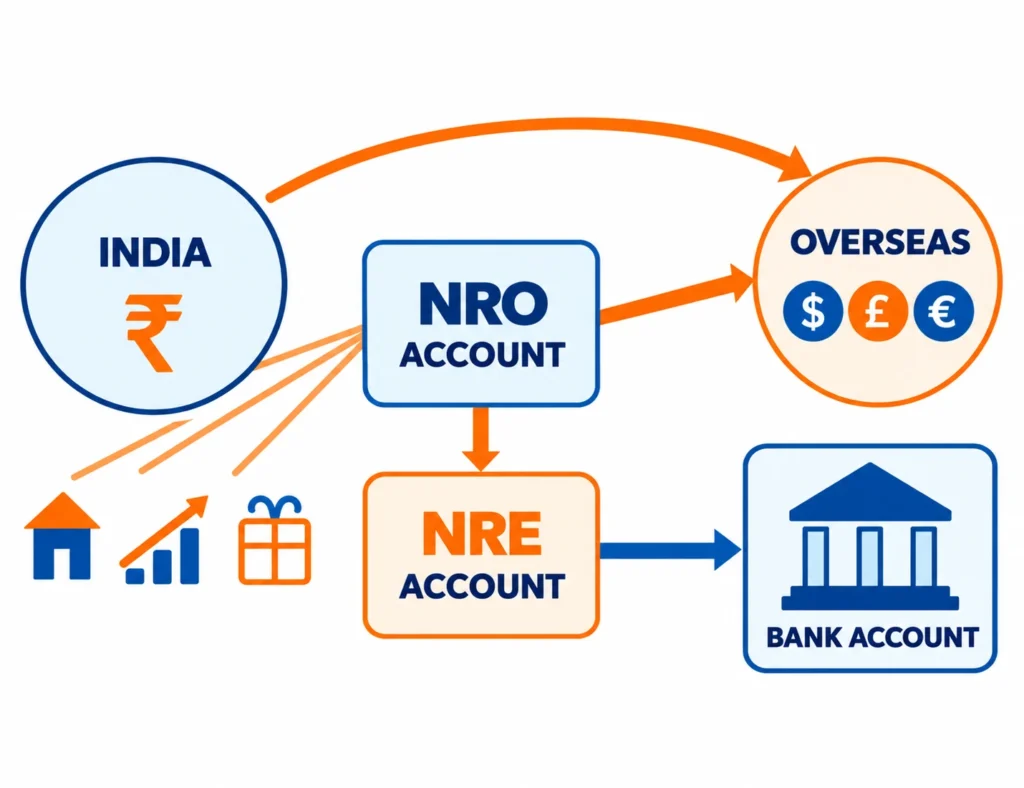
Under FEMA regulations, an NRO account enables NRIs to manage income earned or received in India. It is maintained in Indian rupees, and eligible credits include rental income, dividends, pension and other permitted receipts. Repatriation of funds is subject to applicable RBI conditions, documentation and limits. Interest is generally taxable in India, subject to applicable tax provisions.
Under FEMA regulations, an NRE account allows eligible NRIs to hold overseas remittances and other permitted funds in Indian rupees. Eligible principal and interest are generally repatriable. Interest may be exempt from Indian income tax if the account holder meets the prescribed eligibility conditions. Joint accounts and loans against balances are subject to applicable RBI rules.
FEMA regulations permit eligible NRIs to maintain FCNR(B) term deposits in specified foreign currencies with authorised banks. These deposits help retain savings in foreign currency rather than converting the principal into Indian rupees. Interest, maturity proceeds, joint holding, transfers and loans are governed by applicable RBI regulations and banking terms.
An RFC account is intended for eligible individuals who have returned to India and qualify as residents under FEMA. It allows eligible foreign currency assets, including qualifying overseas retirement benefits and certain NRE or FCNR(B) balances, to be held in foreign currency. Permitted credits, account operation, overseas use and taxation depend on the applicable FEMA and income-tax provisions.
NRIs may need to transfer funds from India arising from investments, property, inheritance, gifts, business interests or other legitimate sources. Under FEMA, the route and conditions for repatriation depend on the source of funds, type of bank account and repatriation status of the money.
Eligible balances held in an NRO Account may generally be transferred to an NRE Account or remitted outside India, subject to prescribed limits, payment of applicable taxes and completion of the required banking and regulatory documentation.
Repatriation may arise in cases such as:
In certain cases, eligible balances and assets may be remitted under the USD 1 million facility, subject to FEMA regulations and prescribed conditions. The applicable tax and documentation requirements should also be reviewed before remittance.
1
We begin by understanding your residential status, country of residence and the transaction you wish to undertake. This helps identify the relevant FEMA and banking requirements.
2
We identify the rules and conditions that may apply to your transaction, including banking arrangements, repatriation and eligibility.
3
We help identify the documents and records required to support your transaction and meet applicable compliance requirements.
4
We help organise the applicable steps and coordinate with authorised banks, tax professionals or other relevant institutions, where required.
5
Changes in your residency, financial arrangements or transaction needs may require further review. We help identify these requirements and guide you towards the appropriate professionals or institutions.
Other service providers bill you separately for each service, making you pay more at extra costs.


Achieving financial stability begins with the right advice. Our experienced advisors help you identify suitable investment opportunities, manage risks, and create a clear strategy for long-term financial growth.

























Find quick answers to common questions about our services, processes, and financial solutions.
FEMA is India's principal foreign-exchange law. It regulates specified foreign-exchange and cross-border transactions and can become relevant to NRIs when they deal with Indian investments, property, bank accounts, gifts, inheritance and repatriation.
Ashutosh Financial Services combines NRI financial, investment, taxation and wealth-planning experience. This allows FEMA requirements to be considered alongside the tax, banking, investment and estate-planning aspects of a transaction.
NRIs and OCIs may acquire eligible immovable property in India other than agricultural land, farm house or plantation property, subject to the conditions prescribed under FEMA.
Eligible funds can be repatriated subject to the applicable FEMA framework, source of funds, account type, nature of transaction, documentation and other conditions. There is no single repatriation rule applicable to every NRI transaction.
Both are rupee-denominated NRI accounts, but they serve different purposes and have different rules relating to credits, debits and repatriation. NRO accounts are generally used for managing legitimate Indian rupee income and have specific restrictions and permitted facilities for repatriation.
NRIs can invest in eligible Indian securities through permitted routes, subject to the applicable FEMA/foreign-investment framework, security-specific conditions, account requirements and reporting obligations.
No. FEMA and income-tax law are separate frameworks. A transaction can be permitted under FEMA but still have tax implications under Indian income-tax law.
Yes, FEMA regulations provide specific provisions for acquisition of immovable property by inheritance by NRIs and OCIs, subject to the applicable conditions.
Certain gifts can be permitted, but the applicable FEMA and tax rules depend on the nature of the asset, donor, recipient, relationship and transaction structure. These should be checked before the transfer.
When a person becomes resident in India under the applicable FEMA framework, their banking arrangements, investments and other financial interests may need to be reviewed and appropriately reclassified or managed according to the applicable rules.
FEMA is India's principal foreign-exchange law. It regulates specified foreign-exchange and cross-border transactions and can become relevant to NRIs when they deal with Indian investments, property, bank accounts, gifts, inheritance and repatriation.
NRIs and OCIs may acquire eligible immovable property in India other than agricultural land, farm house or plantation property, subject to the conditions prescribed under FEMA.
Eligible funds can be repatriated subject to the applicable FEMA framework, source of funds, account type, nature of transaction, documentation and other conditions. There is no single repatriation rule applicable to every NRI transaction.
Ashutosh Financial Services combines NRI financial, investment, taxation and wealth-planning experience. This allows FEMA requirements to be considered alongside the tax, banking, investment and estate-planning aspects of a transaction.
Both are rupee-denominated NRI accounts, but they serve different purposes and have different rules relating to credits, debits and repatriation. NRO accounts are generally used for managing legitimate Indian rupee income and have specific restrictions and permitted facilities for repatriation.
NRIs can invest in eligible Indian securities through permitted routes, subject to the applicable FEMA/foreign-investment framework, security-specific conditions, account requirements and reporting obligations.
Yes, FEMA regulations provide specific provisions for acquisition of immovable property by inheritance by NRIs and OCIs, subject to the applicable conditions.
Certain gifts can be permitted, but the applicable FEMA and tax rules depend on the nature of the asset, donor, recipient, relationship and transaction structure. These should be checked before the transfer.
No. FEMA and income-tax law are separate frameworks. A transaction can be permitted under FEMA but still have tax implications under Indian income-tax law.
When a person becomes resident in India under the applicable FEMA framework, their banking arrangements, investments and other financial interests may need to be reviewed and appropriately reclassified or managed according to the applicable rules.
Disclaimer: Clicking a login button will redirect you to an external portfolio platform.

