
Preliminary
In the preliminary discussion, we will inform you all about sovereign gold bonds. We will explain to you in detail all the key things about investing in SGBs.,

Precious metals are naturally occurring metallic elements that are rare, durable, and possess high economic value. Due to their scarcity and unique physical properties, they have been used for centuries as a store of value, a medium of exchange, and an important component in jewellery and industrial applications.
These metals are highly resistant to corrosion and oxidation, making them suitable for long-term preservation of wealth. Because of their global demand and limited supply, precious metals are widely recognized as an important asset class in investment portfolios.
Investors often consider precious metals as a means of protecting wealth, especially during periods of inflation, currency fluctuations, or economic uncertainty.
Investing in precious metals offers several benefits that can help strengthen and diversify an investment portfolio.
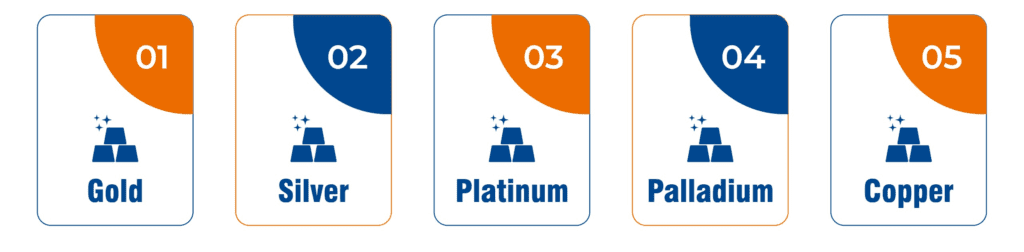
Gold (Au)
Gold is the most well-known and widely traded precious metal. For thousands of years, it has been valued as a symbol of wealth, stability, and financial security.
Gold is commonly used in jewellery, central bank reserves, and investment products such as gold bars, coins, and exchange-traded funds. It is also used in electronics and medical applications due to its excellent conductivity and resistance to corrosion.
Because of its stability and universal acceptance, gold is often considered a reliable store of value and an important hedge against inflation and currency depreciation.
Silver (Ag)
Silver is both a precious metal and an important industrial commodity. It has the highest electrical and thermal conductivity of all metals, making it essential in various industrial applications.
Silver is widely used in electronics, solar panels, medical devices, batteries, and photographic equipment. It is also used in jewellery and silverware.
Compared to gold, silver is more affordable, making it accessible to a broader range of investors. However, its price may be more volatile due to fluctuations in industrial demand.
Platinum (Pt)
Platinum is a rare and valuable precious metal known for its durability, density, and resistance to chemical reactions. It is rarer than gold and is widely used in industrial applications.
One of the major uses of platinum is in catalytic converters in automobiles, where it helps reduce harmful emissions. It is also used in the chemical, petroleum, and medical industries, as well as in high-end jewellery.
Because of its limited supply and strong industrial demand, platinum can experience significant price movements.
Palladium (Pd)
Palladium is part of the platinum group of metals and has gained significant importance in recent years due to its industrial uses.
It is primarily used in catalytic converters for vehicles to reduce emissions. Palladium is also used in electronics, dentistry, and hydrogen purification.
Due to increasing environmental regulations and the growing automotive industry, the demand for palladium has risen considerably.
Copper (Cu)
Copper is one of the oldest metals used by humans and plays a crucial role in modern infrastructure and industrial development.
It is widely used in electrical wiring, construction, power transmission, electronics, and renewable energy technologies. Copper is also essential for electric vehicles and clean energy systems.
Because copper demand closely reflects economic activity, it is sometimes referred to as “Dr. Copper,” as its price trends often indicate the overall health of the global economy.
Investors can gain exposure to precious metals through several investment methods depending on their financial goals, risk tolerance, and investment horizon.
Silver ETFs (Exchange-Traded Funds) are investment funds that track the price of silver and trade on stock exchanges, similar to stocks. These ETFs hold physical silver bullion or invest in derivative contracts linked to the price of silver. Investors can buy and sell shares of these ETFs throughout the trading day, providing them with exposure to the price movements of silver without needing to own physical silver or futures contracts.

Some well-known silver ETFs include iShares Silver Trust (SLV), Aberdeen Standard Physical Silver Shares ETF (SIVR), and Invesco Physical Silver ETF (SIVR).
Platinum ETFs (Exchange-Traded Funds) are investment funds that track the price of platinum and trade on stock exchanges. Similar to other commodity ETFs, platinum ETFs can hold physical platinum bullion or invest in derivative contracts linked to the price of platinum.
Investors can buy and sell shares of platinum ETFs throughout the trading day, providing them with exposure to the price movements of platinum without needing to own physical platinum or futures contracts.


Ashutosh Financial Services is a 25+ years old company that has been assisting individuals and companies in various aspects like Investment, Insurance, Income Tax Planning, etc. At Ashutosh Financial Services we always put the investors’ interests first and do our best to ensure that investors’ objectives are achieved in a timely manner. We strive to make every Indian financially literate and independent.
We at Ashutosh Financial Services put maximum importance on understanding your Investment objectives and creating a customized investment plan to ensure the complete achievement of your investment goals. We pride ourselves to be the best goal-based planners. Post Investment, we keep regular track of all your investments to ensure the complete achievement of your investment objectives.
Through our years of experience, we at Ashutosh Financial Services have created a process through which we aim to provide you with the best investment-related services and ensure that you have a hassle-free experience. We have a team of well-qualified and experienced members that are more than enough capable to assist you regarding all your investment matters.

Preliminary
In the preliminary discussion, we will inform you all about sovereign gold bonds. We will explain to you in detail all the key things about investing in SGBs.,
Investment Process
Once you have confirmed your decision to invest in sovereign gold bonds, we will begin the investment process. You will have to pay the agreed amount for the sovereign gold bonds via a cheque or net banking & once the payment is received it will take around 3 days for the units to reflect in your demat account. All sovereign gold bonds will be credited to your demat account only
After Investment Service
Once the investment is done, you will be provided with a dedicated Relationship Manager. All your queries will be solved by the relationship manager.
Our aim is to become your one-stop solution for your financial needs. Through our expert and qualified team, we try to give you the best advice regarding your investments. We also keep ourselves updated with all the activities happening in the world of finance. We aim to provide you with quality & unbiased services to secure your goals and future needs. We at Ashutosh Financial Services, are committed to continuously providing financial services to our investors to the best of our ability.

The interest on these bonds is taxable as per the Income Tax Act, 1961. On redemption, there is no capital gains tax on this. Also, the long term capital gains come with indexation benefits.
Disclaimer: Clicking a login button will redirect you to an external portfolio platform.