Doctors spend years mastering the science of keeping others healthy, but the health of their own finances often gets far less attention than it deserves. It was this gap that Ashutosh Financial Services set out to address once again, continuing a tradition of financial literacy sessions built on a simple belief: sound financial decisions are only possible when they are backed by sound financial understanding. Empowering people, especially busy professionals, with practical and usable knowledge remains at the heart of everything the firm does through these initiatives.
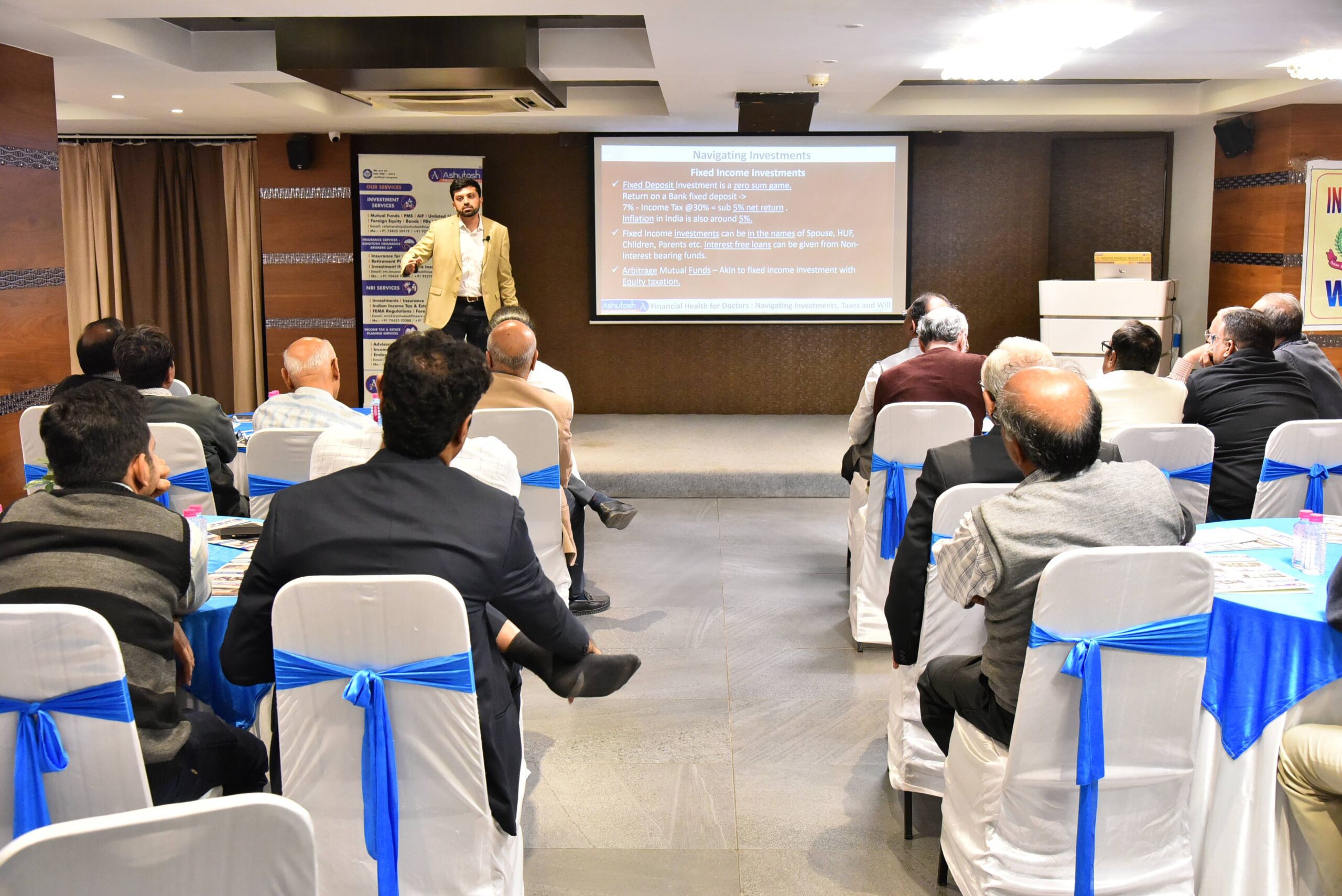
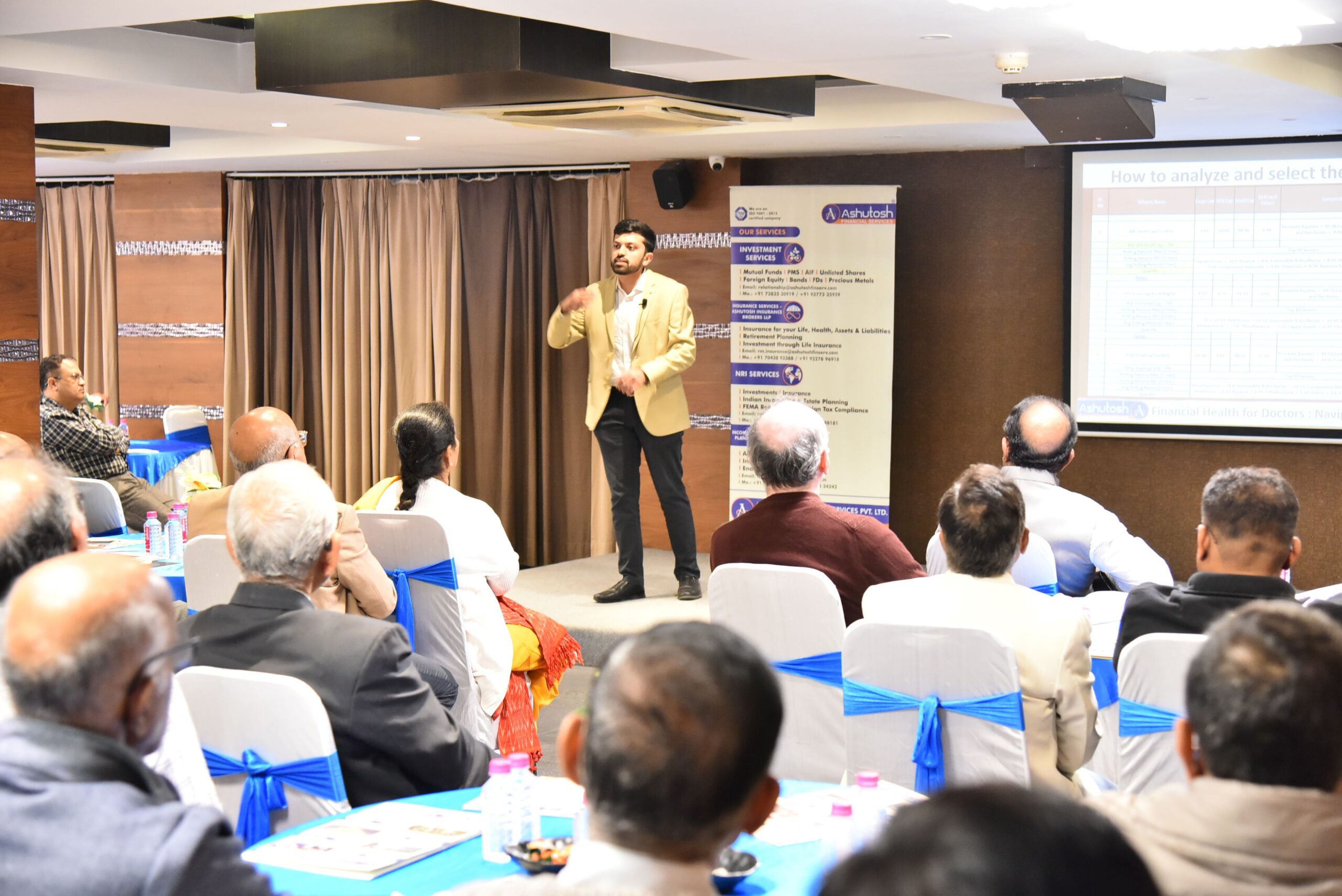
On 11th January 2025, this commitment brought the firm to Gandhinagar for a session titled “Financial Health for Doctors: Navigating Investments, Taxes and Will,” organised for members of the Indian Medical Association. Daxesh Kothari and CA CFP Rajit Kothari led the discussion, speaking to an audience of practising doctors whose professional demands leave little room to track markets, tax rules, or estate laws closely. For this group, the session was designed to distill years of financial planning experience into insights that could be applied directly to their own lives.
The conversation began with a hard look at fixed deposits, a favourite among conservative investors. A 7% return, once reduced by income tax at 30%, leaves a net return of around 5%, which is roughly where inflation in India also sits. In effect, money parked purely in fixed deposits may not be growing in real terms at all. The session offered a practical workaround: spreading fixed income investments across family members such as a spouse, children, parents, or a Hindu Undivided Family, since each individual’s income is taxed separately and interest-free loans can be extended from funds that don’t otherwise earn interest. Arbitrage mutual funds were presented as another option worth considering, since they behave like fixed income instruments in terms of stability but are taxed under equity rules, which tend to be more favourable.
Equity mutual funds, through the systematic investment route, were discussed as an accessible way to participate in the stock market, with the reminder that a portfolio should be built around an individual’s financial profile, risk appetite, and goals rather than chasing whichever fund performed best recently. For those with larger corpora, portfolio management services were introduced as a route to a personalised, professionally managed equity portfolio held directly in the investor’s own name. The session also touched on unlisted shares and Alternative Investment Funds, illustrating the potential of early-stage investing with a case study of NSE’s own unlisted stock, which delivered close to 9.57 times returns over roughly 4.78 years. Investing in US markets was covered as well, framed around the value of geographical diversification and exposure to global companies, alongside the Reserve Bank of India’s Liberalised Remittance Scheme, which currently permits resident Indians to remit up to $250,000 per person each year.
On real estate versus financial assets, a candid point was made: physical property often comes with real challenges around liquidity and ongoing management, and many in the next generation are simply not equipped or inclined to manage it, which is prompting a broader shift toward financial assets as a more manageable long-term option.
Taxation formed a substantial part of the discussion, given how directly it affects a doctor’s take-home income. Attendees were reminded that under Section 37 of the Income Tax Act, expenses incurred wholly for professional purposes, including seminar fees, related travel, and even a spouse’s salary if genuinely employed in the practice, can be claimed as deductions. Creating a Hindu Undivided Family was highlighted as a legitimate way to distribute income within a family and reduce the overall tax burden. At the same time, the session flagged real risks: unexplained credits in one’s accounts can attract tax at rates exceeding 77%, and cash expenses above ₹10,000 are not allowed as deductions at all.
The final segment addressed something many people avoid discussing: succession planning. The distinction between testamentary succession, where a valid will exists, and intestate succession, where personal laws such as the Hindu Succession Act or Indian Succession Act apply by default, was explained clearly, along with the often-misunderstood point that a nominee is merely a custodian of assets, not their legal owner. A will remains the only reliable way to direct assets to specific people, including those who may not otherwise qualify as legal heirs.
Sessions like this one reflect an ongoing effort to make financial concepts approachable for professionals who rarely get the time to sit with them. Ashutosh Financial Services continues to organise these initiatives because financial well-being, much like physical health, benefits most from regular attention and informed decisions made well before they become urgent.